
At first, RE-ANIMATOR, by director STUART GORDON, may seem like a parody of Frankenstein, a mad scientist eager to bring the dead back to life, but it quickly turns into its own ‘thoroughly original’ (Ochoa, 2011, 136) nightmare, drowned in gore, and plastered with bizarre humor. As described by Jeffrey Combs,
‘It has a camp quality […] so it requires a heightened approach. It has its own unique style.’ (Combs, 2014)
This film is the adaptation of one of the six horrific stories from the series about Herbert West – Reanimator, written by H.P. LOVECRAFT. Gordon found out, Lovecraft
‘hated the story himself.’ (Gordon, 2014,11) ‘He didn’t like it because he was paid to write it. […] In some ways, that made it a lesser work for him, but I actually think it’s one of his best,’ explained Gordon. (Gordon, 2014, 12)
On the surface, this film looks ridiculous because it was made on a shoestring budget, but underneath the splatter, the unrealistic occurrences and the banal jokes, many themes cross over into philosophical conversations. The theme
‘what this film is about is conquering death.’
Stuart Gordon
THE MISSING INGREDIENT
Throughout the film, Herbert West’s character (Jeffrey Combs) doesn’t change at all. He is determined to bring people back to life no matter what.
‘His attitude is that same of any doctor, that it’s better to save a life even if it means the person is going to be debilitated than let the person die. Even if there is brain damage, it’s still better to have that person living than dead. So under that philosophy, his approach is medically correct.’ (Gordon, 1985, 46)
And Herbert accomplished his goal. Audiences around the world have to realize, none of West’s subjects was a failure.

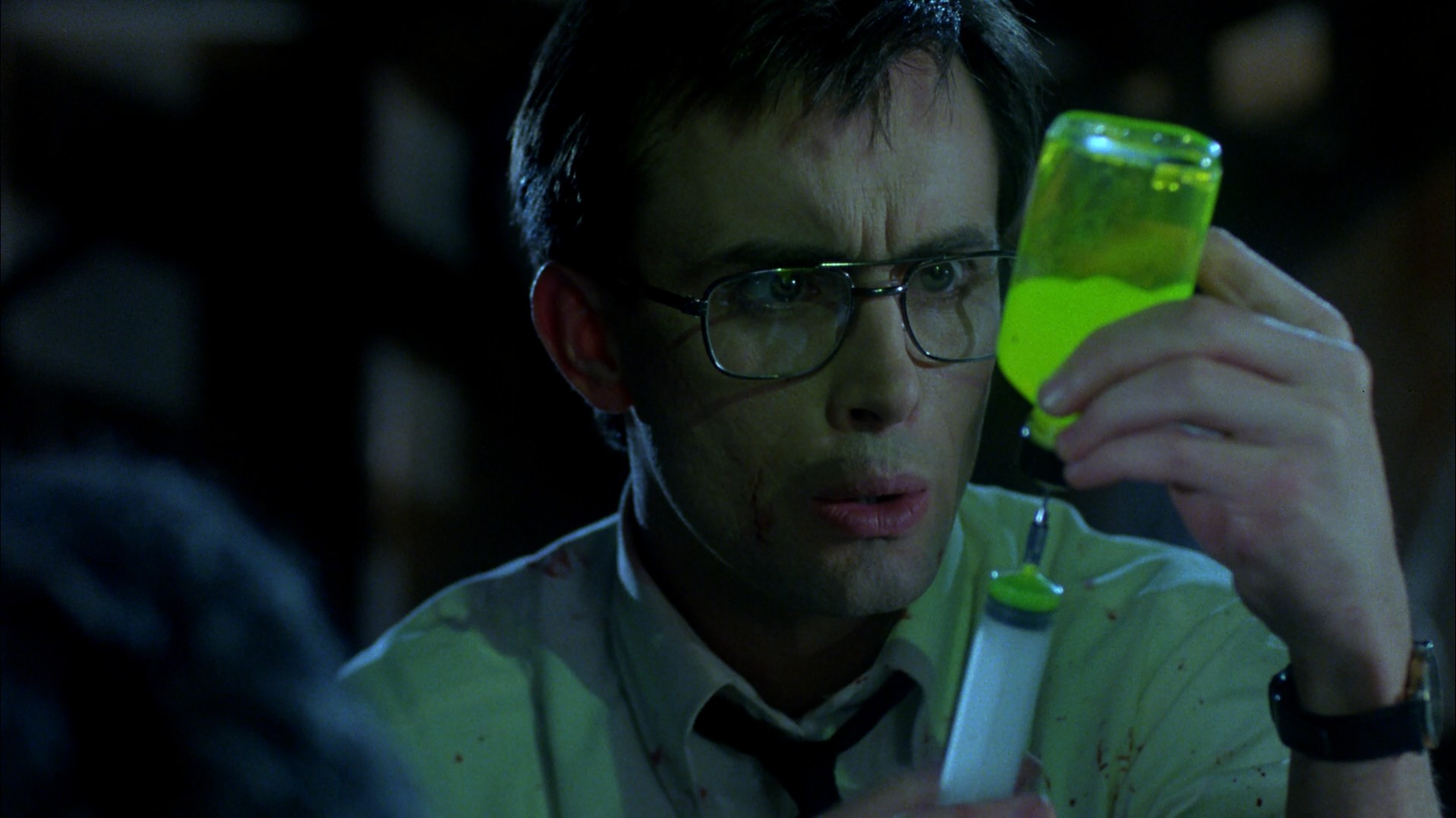
He is successful in bringing people back. But there is a catch:
‘It brings you back, but never as yourself, never as the person you knew yourself to be. You are something different.’ (Kisner, 2021)
Why aren’t they completely restored? What might be the problem that is causing the dead to transform? Is Herbert aware of that problem? Is he capable of realizing what the problem might be? The serum,
‘they inject it at the base of the skull, and what it does is, it’s like sticking your finger in a light socket, you just go AAARGH!’ deducts Sampson. (Sampson, 1985, 46)
Albert Einstein’s definition of insanity: Insanity is doing the same thing over and over again and expecting a different result. This is what Herbert is doing throughout the film. He uses the same bright green liquid over and over. He might change the quantity of the dosage, yes, but not the quality. The result is always the same and Herbert doesn’t see that he has to change the formula. He is already satisfied with proving to everybody that he is indeed capable of injecting new life into dead tissue.

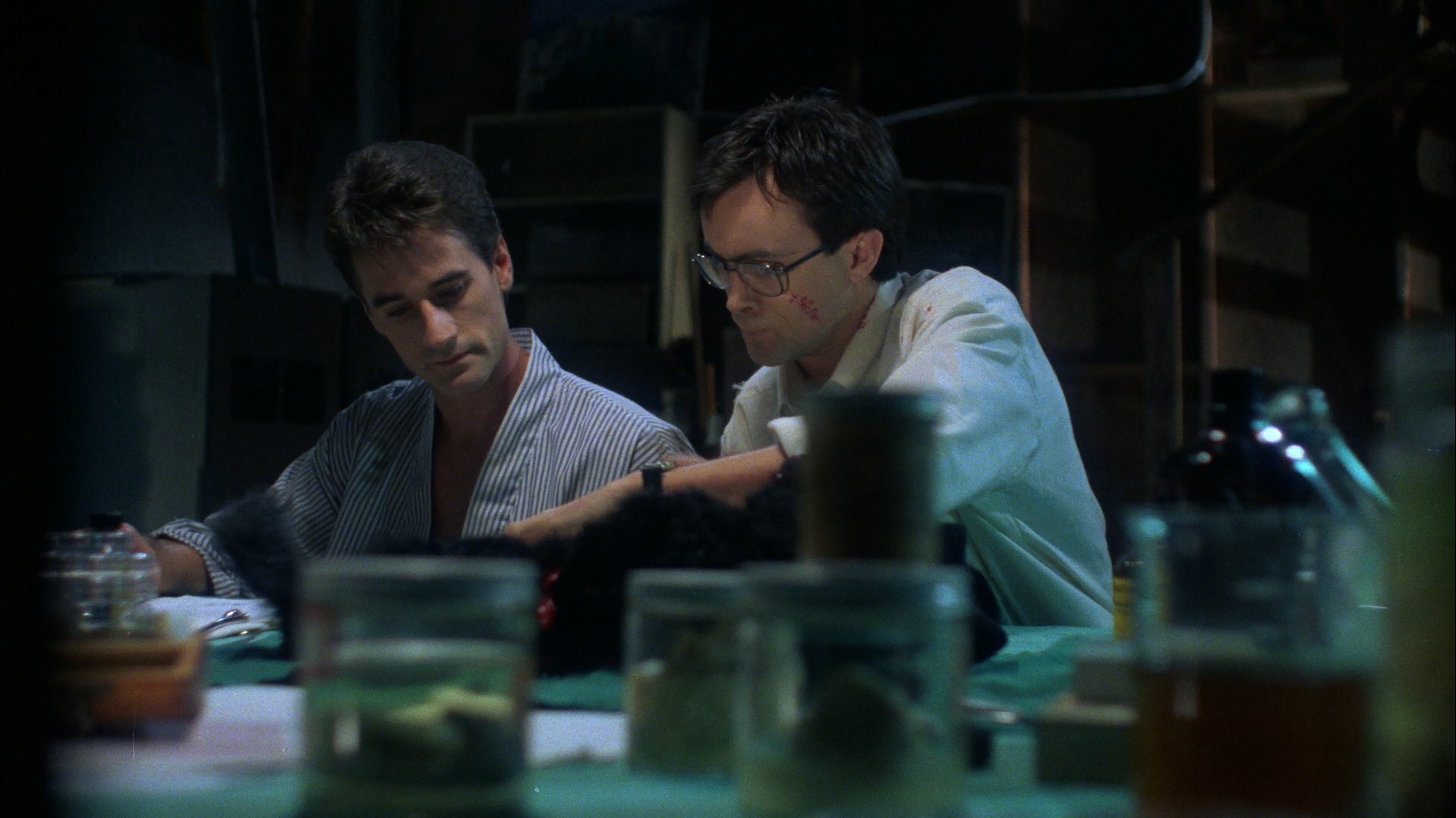
Herbert is a scientist, but he can’t comprehend the whole picture. He never mentions the ingredients of the serum, nor is he willing to give up the formula to his assistants. It seems like Herbert stores a giant amount of that liquid in the back of his room and until it’s used up to the very last drop, he is not willing to change anything about the formula. His thought process is ‘quite simple. All life is a physical and chemical process, correct?’ poses Herbert. For him, the human body is just a machine. Death equals a malfunctioned system and his reanimation process equals repairing this human machine, which was soulless in his eyes from the very beginning. As a non-believer, he is a slave to the scientific method, completely ignoring the fact that humans have a soul as well. As long as he doesn’t acknowledge the human soul, he won’t succeed.
WHO IS THE PROTAGONIST?

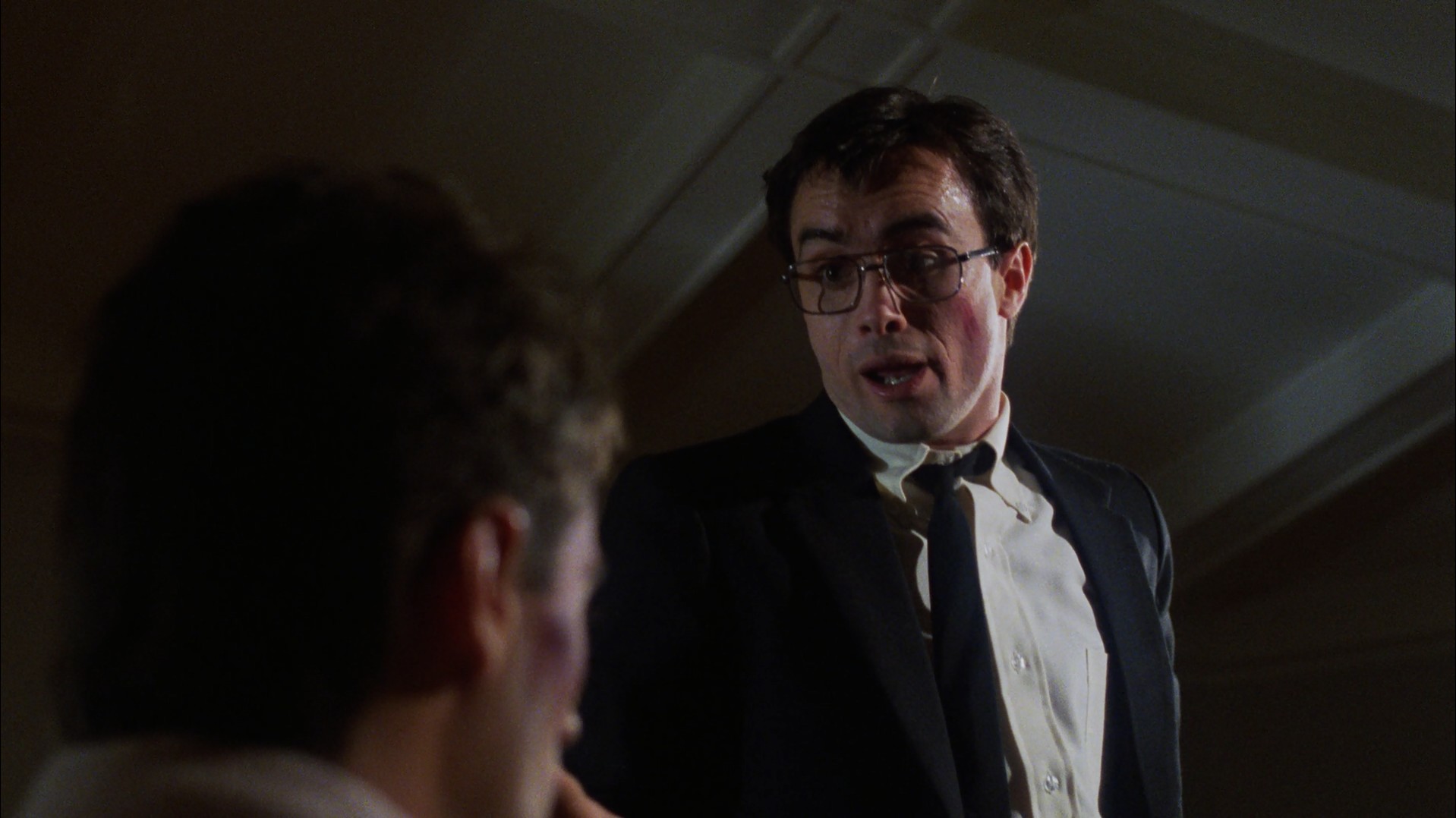
In the prologue of the film, at the University of Zurich, Switzerland,
‘Herbert West is, like Frankenstein, an arrogant mad scientist,’ (Hallenbeck, 2009,143)
who made an illegal experiment on Dr Gruber which has gone haywire. Because of this, he was incarcerated and lost all his status privileges. Somehow, unexplained, he turns up at the Massachusetts Medical School as a medical student under Dr. Carl Hill. Witnessing all this, it is correct to assume that
‘Herbert is a weird character to be your protagonist,’ says Kisner. (Kisner, 2021)
He is a fugitive, running away from Switzerland to America, and he shouldn’t be trusted. Not only is he waiting for the first opportunity to continue his work, he doesn’t care about getting caught at all. Risking everything by using his real name, and not even thinking about going into hiding renders him a stubborn, reckless psychopath. One way the film tells the audience he might be a psychopath is presented in the music used throughout the opening title sequence. Richard Band’s theme is far too similar to the main theme of Psycho (Hitchcock, 1960), leading the audience to form their own conclusions. Herbert only exists to
‘drive the action,’ (Abbott, 2014)
and not to be questioned. That behavior turns him into a plot device. Since Herbert stays the same during the entire runtime of the film, Dan’s transformation is made that much more obvious.
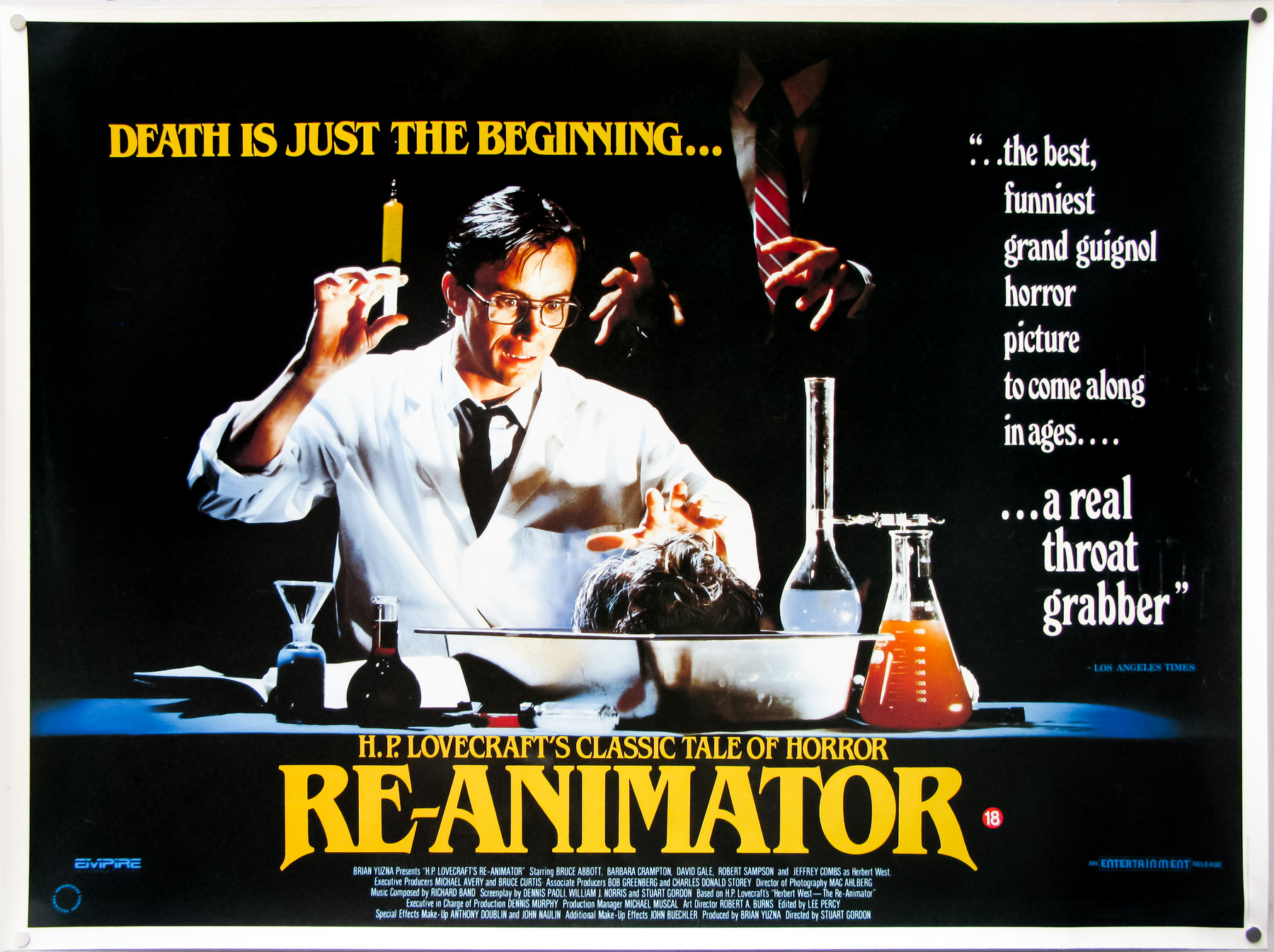
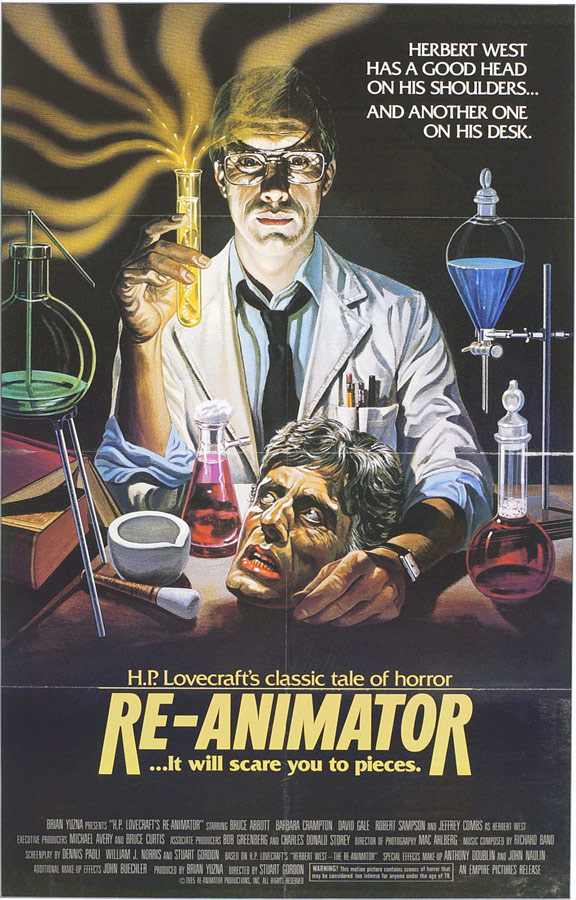
Although the official poster prominently features Herbert as the main act and lead in the film, Dan is not even present in the advertising. After seeing the film, it’s crystal clear that audiences follow Dan throughout this bizarre adventure and they might feel shocked and appalled just like he is.
‘I describe Dan as the audience’s response to this movie. He’s kind, he’s sweet he’s naïve.’ (Abbott, 2014)
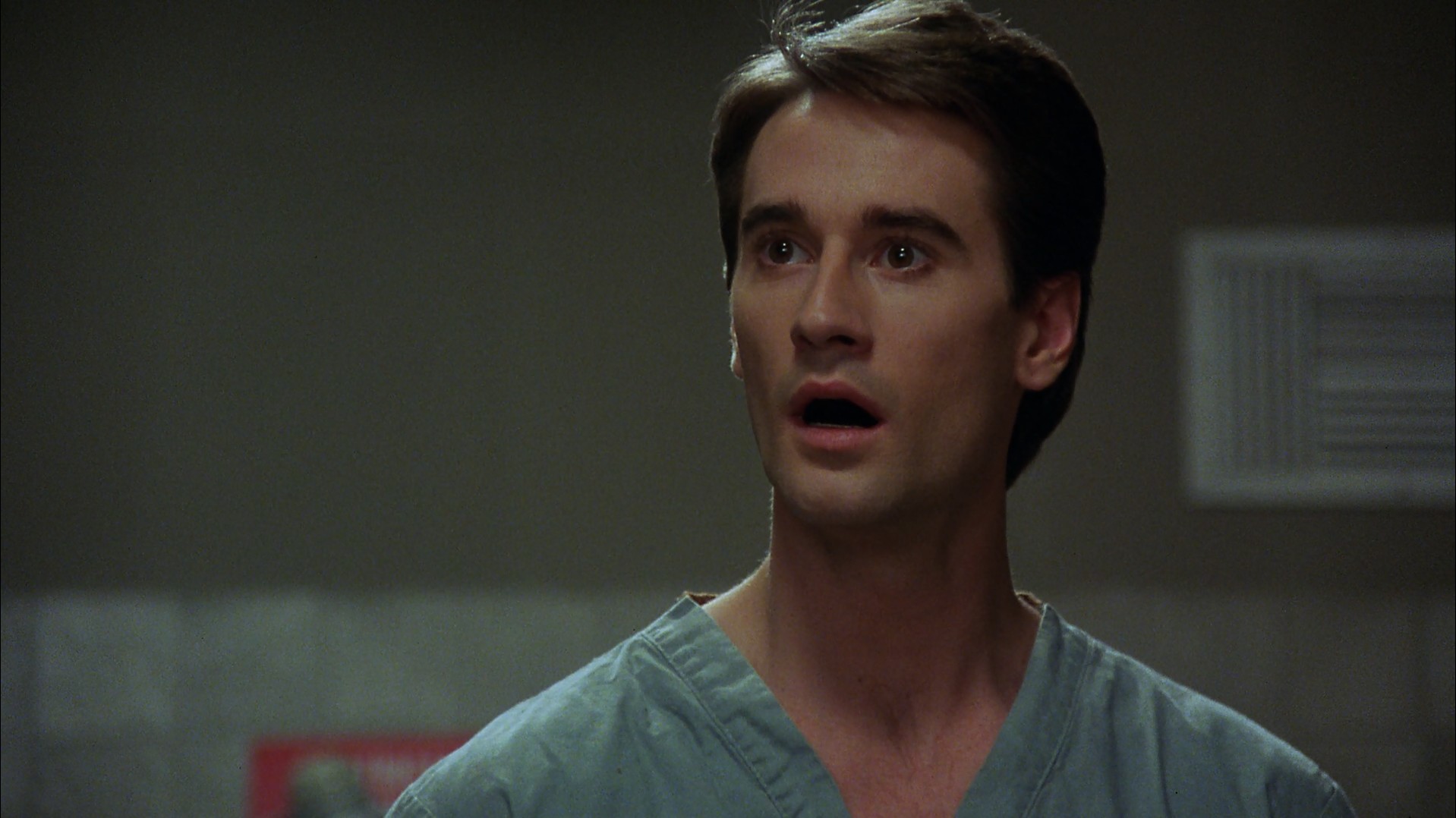

Dan Cain (Bruce Abbott) is a serene medical assistant of Dr. Hill, still paying off his student loans.
‘This is a poor kid who, through scholarship got into Medical School. He’s got a chance at a real future.’ (Gordon, 2014)
Also, he is in love with Megan, the daughter of the Dean of the Medical School.
‘Everybody in the story is so insane, that you needed a normal guy in the midst of all this that you can identify with.’ (Gordon, 2014)
He could have been a doctor and a husband, but he lost it all after Herbert manipulated him into helping him revive the dead. The film is called Re-animator, not because it is important to figure out what the Re-animator a.k.a. wants, or if he is going to be successful about it, it is clear the Re-animator is the cause of all trouble. The one going through the worst trouble is Dan. The film is about him,
‘He is really the one, I think, carrying the movie on his shoulders,’ explains Gordon. (Gordon, 2014)
WHY IS THIS FILM ABOUT DAN?

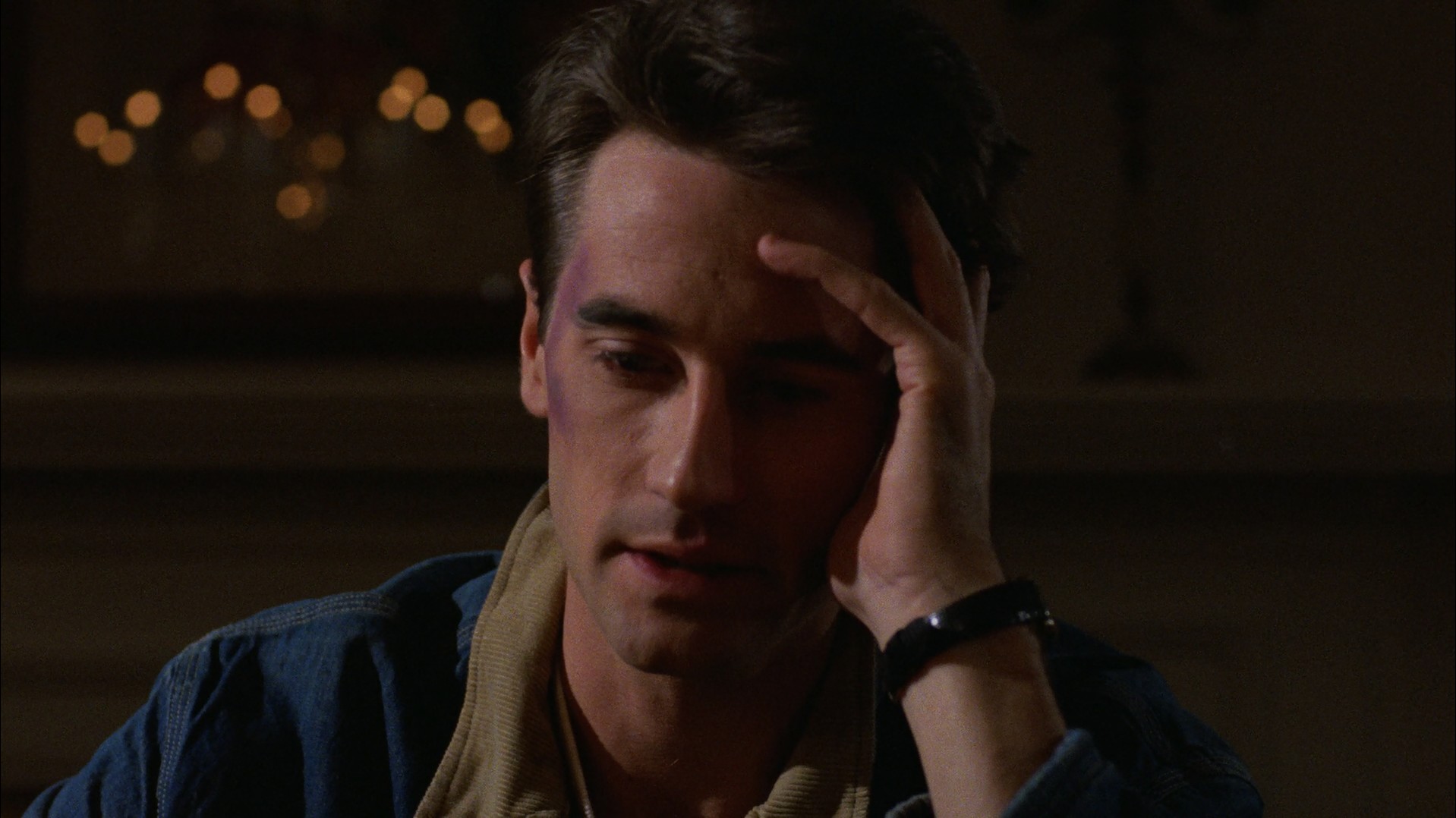
When audiences encounter Dan for the first time, he is trying to revive a patient. Although it is clear there is no help for the patient, Dan is persistent. Hopelessly naïve and determined, that no one will die on his table, he is missing the point that he needs to stop, some other patient might need his help. This is the first test Dan failed to pass.
‘It’s a movie about going too far.’
Bruce Abbott
Egocentrism doesn’t pay. The arrogant Dr Carl Hill wanted to steal West’s notes and discovery to sell it as his own and he lost his head. Literally. West murdered Dan’s cat so he would be able to manipulate Dan into helping him with his experiment, but it backfired. Dan also couldn’t resist the urge to use the potion after Megan died. Dan had the bag with the potion in his hands and instead of leaving it be,
‘As soon as he realizes she’s dead, then he turns a corner. I see Dan plunging into a deep darkness. And falling apart. (…) [He] brought Megan back to life, but it’s not her anymore.’ (Abbott, 2014)
Shaken by the death of his girlfriend, the opportunity to bring her back was in the palm of his hand, he was willing to give everything away just so she could return to his life. With Herbert’s serum, he can right the wrongs. Overwhelmed, he didn’t think about every failure he encountered with Herbert, nor did he think about his future, what would happen if he brought her back. This is the second test that he must face, a carbon copy of the one at the onset of the film. It is an opportunity to show that he learned from his mistakes and whoever the patient might be, he has to remain objective and calculated, not let his emotions interfere with the problem at hand.
‘Dan also must have a terrible memory. I mean, what part of this works? What part of this really works?’ asks Bruce Abbott. (Abbott, 2014)

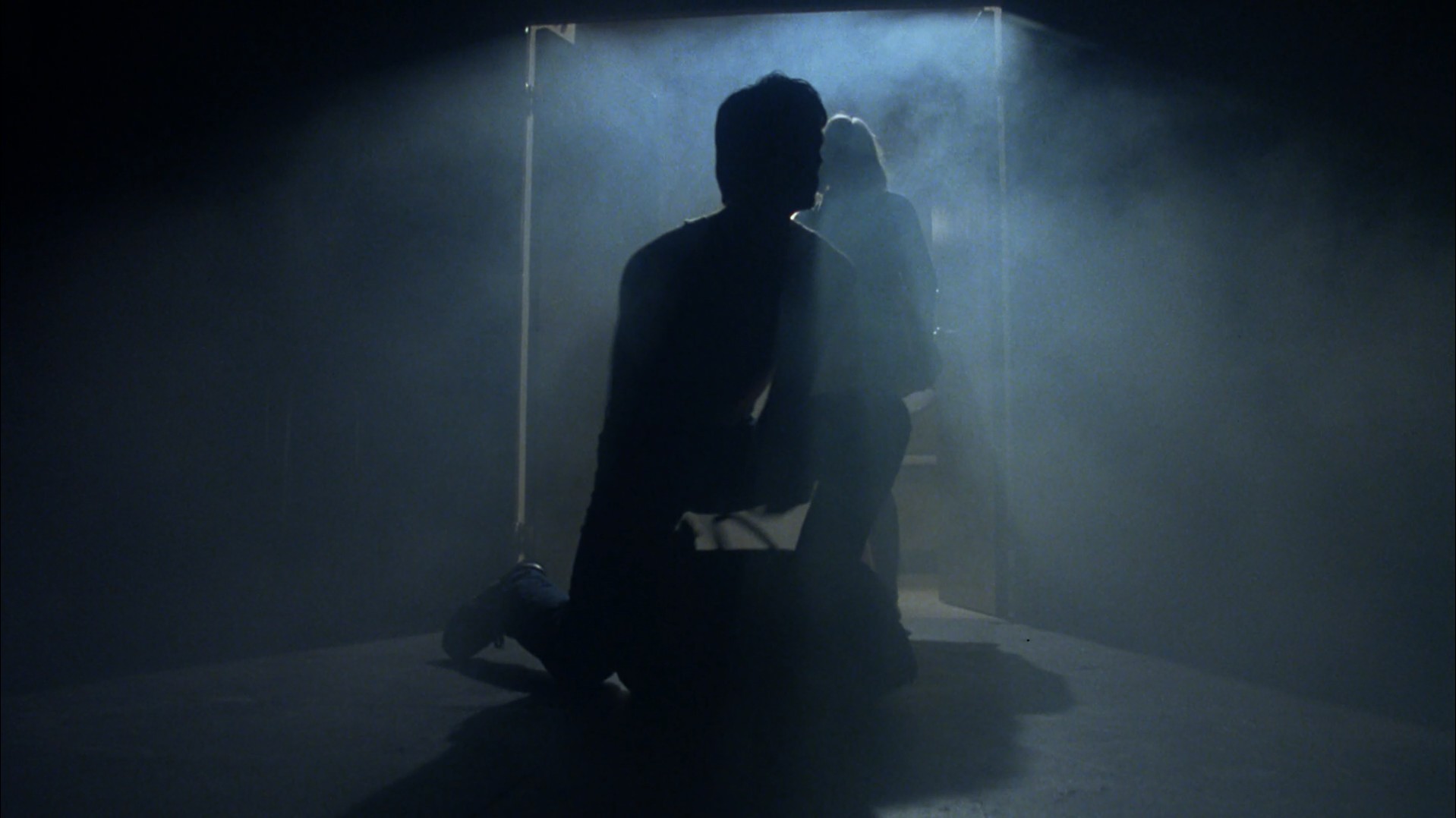
Re-animating the dead ones doesn’t mean bringing them back to life, but to animate the remains, that is what is left, with all their flaws. Dan failed as a loyal boyfriend, as a medical assistant, and as a doctor-to-be. In a way, he showed more arrogance than Herbert, because he should have learned by now that
‘A good doctor knows when to stop,’ proclaimed Dr Harrod at the beginning of the film. (Gordon, 1985)
FINAL WORD
No one expected this kind of film to Premiere at the Cannes Film Festival, but it managed to entertain audiences and win the Critic’s Award in the year 1985. The film was made with a one-million-dollar budget and earned twice as much, and
‘The age of videocassettes rescued Re-animator from the oblivion’ (Hanke, 1991,314)
making it a household cult hit. The recognizable sharp neon green liquid and the outrageous one-liners are forever embedded into the history of horror films.
‘It is timeless in its irrationalness. This is a movie that will not die.’
Jeffrey Combs
BIBLIOGRAPHY
Alexander, Chris, ‘Stuart Gordon’s theatre of Blood – Re-animator’s legacy of off-colour carnage continues to hold court in horror’, Delirium Issue 1, Full Moon Holdings, Los Angeles, 2014.
Fischer, Dennis, ‘A moist Zombie movie – A look at The Re-animator, a blood-drenched adaptation of H.P. Lovecraft’, Fangoria Issue 46, Volume 3, O’Quinn Studios Inc., New York, 1985.
Gordon, Stuart, Re-animator, Empire pictures, Re-animator Productions, 1985.
Hallenbeck, Bruce G., Comedy-Horror Films, A Chronological History, 1914-2008, McFarland & Company, Inc., Publishers, Jefferson, North Carolina, and London, 2009.
Hanke, Ken, A Critical Guide to Horror Film Series, Routledge, Taylor & Francis Group, 1991.
Kisner, Logan Ashley, ‘Made to be monsters Re-animator’, https://aninjusticemag.com/made-to-be-monsters-re-animator-659943b944df?gi=cb1d737caceb, 2021.
Nutman, Philip, ‘Bad Dreams for Bruce Abbott’, Fangoria Issue 74, Volume 8, O’Quinn Studios Inc., New York, 1988.
Ochoa, George, Deformed and destructive beings: the purpose of horror films, McFarland & Company, Inc., Publishers, Jefferson, North Carolina, and London, 2011.
Re-animator: Ressurectus, Blu-ray bonus feature, Capelight Pictures, 2014.
 the FILM itself