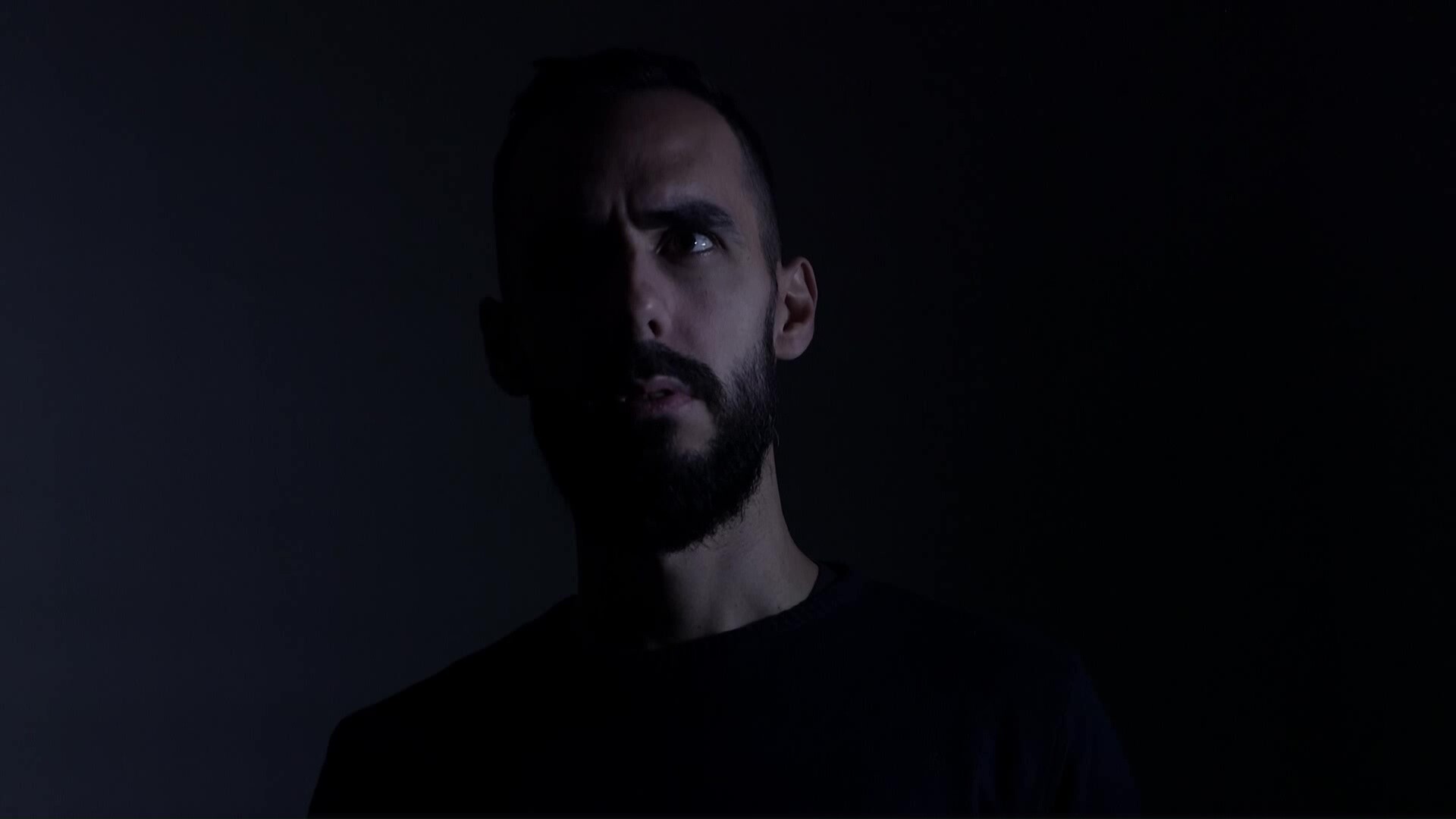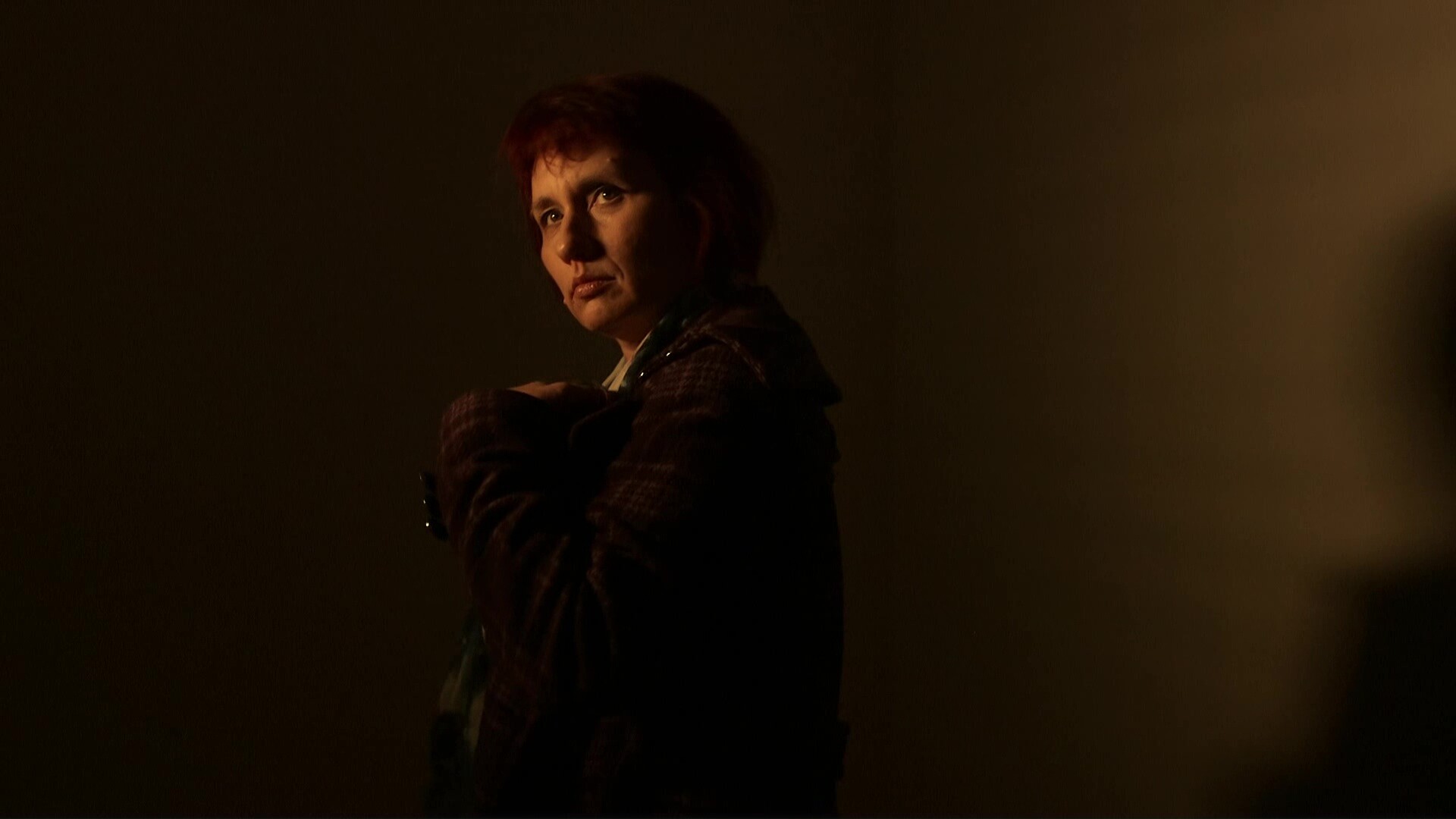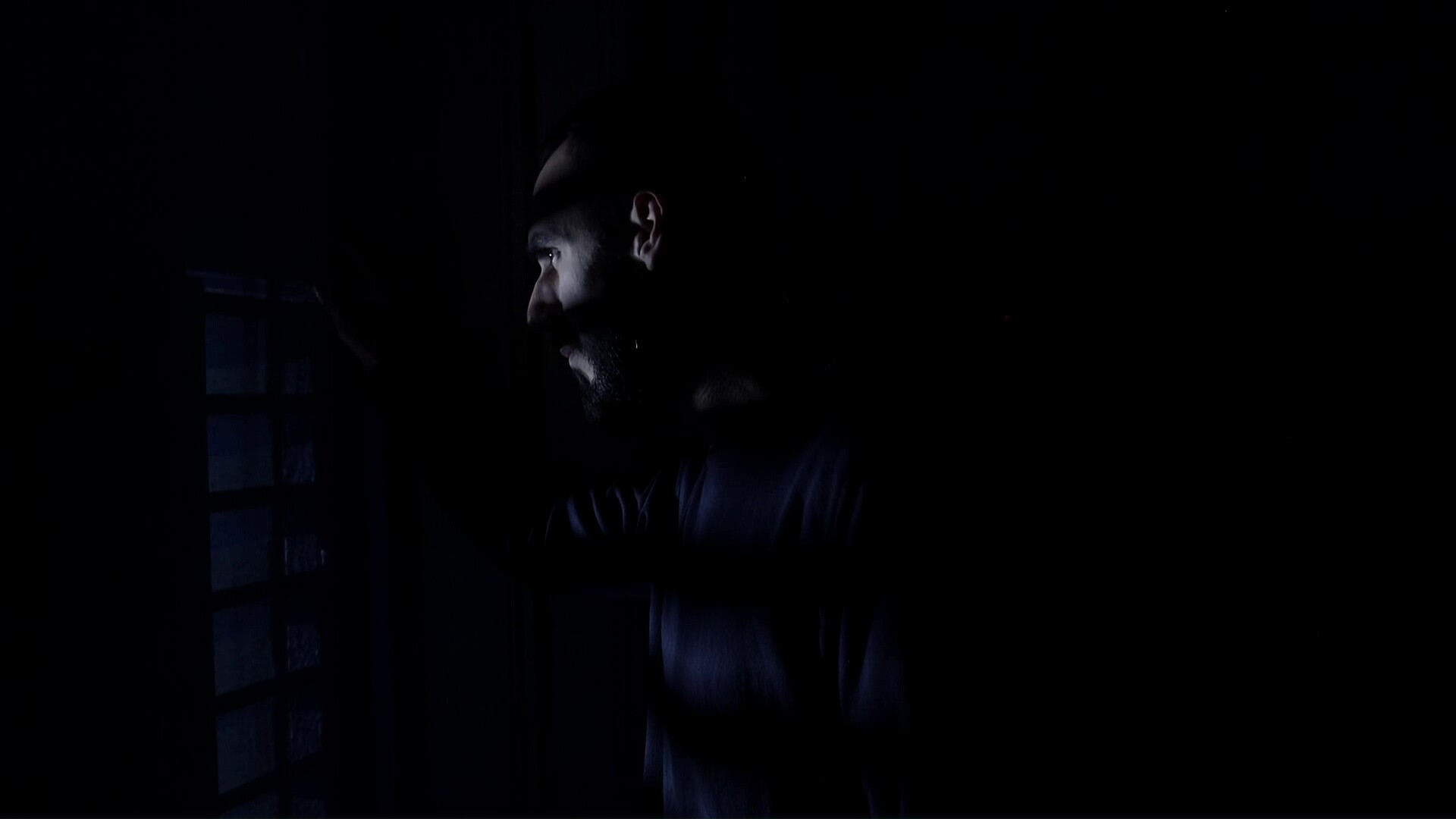
Plagued by insomnia and unspoken dread, a solitary man is jolted from his restless night by the sound of a single, haunting piano note—played on an instrument he thought long abandoned. When he investigates, the music draws him into a strange, shifting realm that blurs the line between dream and reality. There, he encounters a mysterious woman. He knows he summoned her, but neither of them understands why. With time unraveling and reality slipping away, the man must uncover who the woman truly is, what brought her into his world, and what he must face within himself to return. But the deeper he goes, the more questions arise.
2025, 8:58 min, digital, silent
Credits
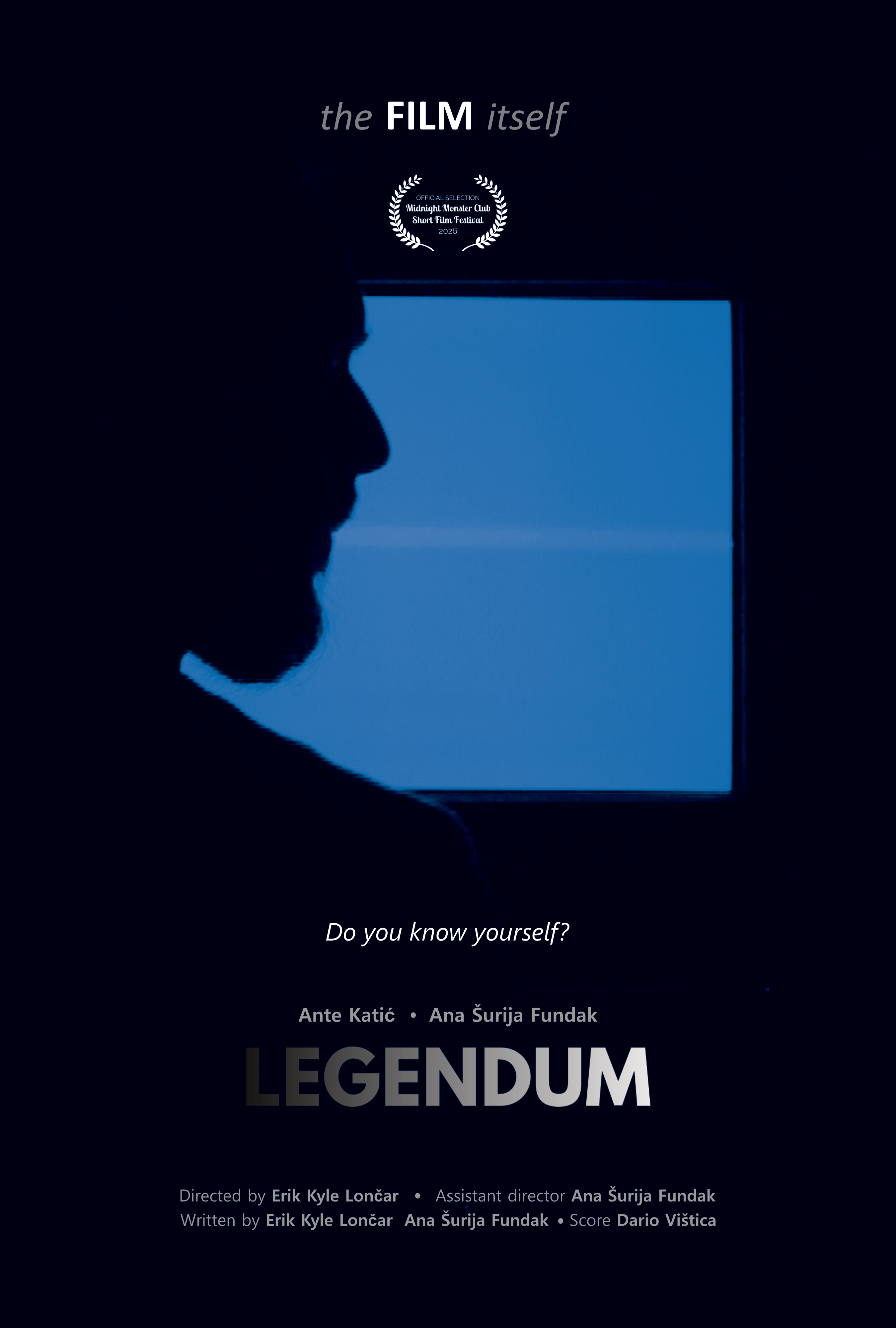
The blue man … Ante Katić
The golden woman … Ana Šurija Fundak
Written by Erik Kyle LončaR, Ana Šurija Fundak
Directed by Erik Kyle LončaR
Edited by Erik Kyle LončaR
Score by Dario Vištica
Director Statement
Legendum is a surreal short film that explores the way unconscious insecurities’ inevitably rise to the surface, no matter how deeply they might be buried. The film tries to achieve:
1) Narrative Subtext and Visual Cues
Throughout the film, subtle visual and symbolic cues suggest that the blue man is not a real entity, but rather a projection of the golden woman’s psyche. She appears in a real photograph and is portrayed as warm and alive, anchored in reality, whereas the blue man is ethereal, cold, and intangible, hinting at his imaginary nature.
2) The Title as a Meta-Invitation
The title Legendum, derived from the Latin for ‘something to be read’, functions as a thematic and meta-textual clue. It calls the viewer not just to watch, but to read the film: to interpret the signs, uncover layers, and question appearances. The film invites the active engagement, making the viewer complicit in the act of making meaning (as David Bordwell used to say).
3) Philosophical Framing
A quotation from Ludwig Wittgenstein frames the experience as a kind of game, one governed by rules that can be learned and mastered. Just as one can become fluent in a language or skilled in a game, the film suggests that viewers can become more adept at perceiving its symbolic logic and decoding its patterns. The Wittgenstein reference emphasizes that understanding is a skill, and that symbolic literacy is something to be learned.
4) Dream Structure and Psychological Conflict
The film opens with a descent into sleep and closes with an awakening, indicating that the entire narrative takes place within a dream. But this dream is not arbitrary or surreal for its own sake, rather it stages a psychological drama, the tension between the real golden woman and the imaginative blue man. What emerges is a symbolic confrontation between the unsecure self and its undesired counterpart.